CLE's Yadvendra Singh Presents Industry’s Issues Before Parliamentarians
LW Desk
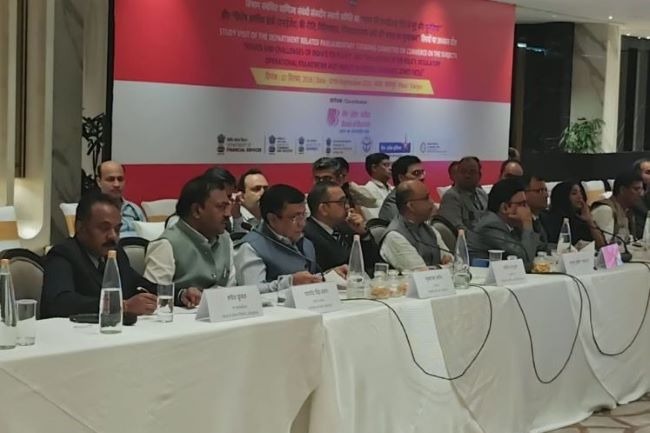
Making a strong case for addressing the challenges faced by India’s leather and footwear industry, Yadvendra Singh Sachan, Regional Chairman of the Council for Leather Exports (CLE), Central Region, recently pushed for key policy reforms before a parliamentary panel.
With the sector at a crucial phase, Singh, who is also the Managing Director of Growmore International Limited, took the industry's real issues straight to Parliament’s Standing Committee on Commerce. In very clear terms, he presented practical ground realities, pressing concerns, and workable solutions for an industry that keeps millions employed and holds massive job-generating potential.
During his representation, Singh focused on four major challenges that manufacturers and exporters deal with every day:
Removing Finished Leather Duty: He pressed for the removal of import duties on finished leather, pointing out that this unresolved issue has dragged on for the last four years.
Fixing Metal Fitting Costs: Because high-quality metal fittings aren't easily available domestically, over 70% of companies depend on imports from China, Vietnam, and Taiwan. Singh explained how under-invoicing and mismatched duty structures make local manufacturing harder, calling for a fairer approach.
Easing Export Obligations: Exporters face a heavy burden with annual targets under EPCG licenses. Singh explained that business doesn't always move in a straight line, especially with shifting global markets and regional conflicts. He proposed moving to a more realistic cumulative system, like a six-year window, rather than rigid yearly evaluations.
Lowering State Policy Investment Caps: While welcoming the Uttar Pradesh government's leather policy, Singh pointed out a major practical disconnect: the 50-crore-rupee minimum investment cap. Because the sector is built on MSMEs, he urged the government to lower the threshold to 5 crores so smaller players have enough room left for daily working capital and operations.
According to Singh, the committee members listened patiently to every point and took detailed notes, assuring him that they would look into resolving these core concerns.
"This seriousness on the part of the parliamentarians is a strong signal that the leather industry’s voice is finally being heard at the highest policy level," Singh added.
Following this positive interaction with parliamentarians, Singh remains confident about the road ahead. He underlined that he will continue working closely with the Council for Leather Exports, state and central government departments, and industry partners. As per Singh, the industry’s shared goal and collective endeavour would be to turn these parliamentary assurances into practical, timely actions that protect jobs, boost competitiveness, and grow India's exports.