
Specialty cycling footwear gains traction as recreational riding surges
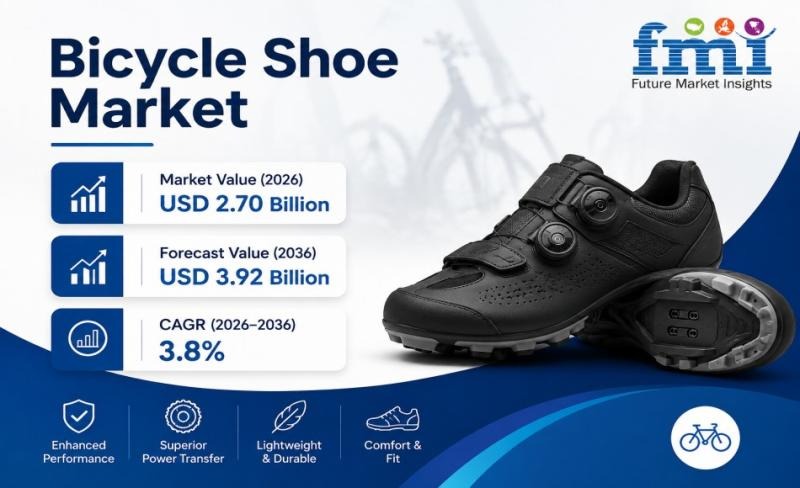
Specialty cycling footwear is gaining strong traction as global market paths toward $3.9 billion by 2036
LW Desk
The global appetite for specialized cycling footwear is accelerating, propelled by a surge in recreational riding, infrastructure investments, and an increasingly sophisticated consumer base willing to pay premium prices for performance.
According to a newly released market analysis by Future Market Insights (FMI), the global bicycle shoe market is valued at $2.6 billion in 2025 and is projected to edge upward to $2.7 billion by the end of 2026. Maintaining a steady compound annual growth rate (CAGR) of 3.8% over the coming decade, the sector is forecast to reach $3.92 billion by 2036.
Shift toward Premium Performance
Industry analysts attribute this upward trajectory to a fundamental shift in rider behaviour. Once considered niche equipment for professional racers, specialized cycling shoes are increasingly viewed as essential gear by daily commuters, fitness enthusiasts, and weekend trail riders seeking better ergonomics, safety, and power transfer.
“The bicycle shoe market is steadily evolving as consumers increasingly prioritize performance, comfort, and durability,” noted Rahul Pandita, a consultant at FMI. Pandita emphasized that brands optimizing their material innovations and digital commerce strategies are best positioned to capture this expanding demand.
To secure a competitive edge, manufacturers are leaning heavily into premium product engineering. The integration of ultra-lightweight materials, rigid carbon-fiber soles, breathable technical fabrics, and precise BOA micro-adjustment closure systems has redefined consumer expectations. This technological push is reflected in the market’s pricing dynamics: the premium price segment is projected to command a dominant 61% share of total industry revenue.
Segment Leadership and Regional Hotspots
Within the product landscape, road bike shoes continue to lead the charge. The segment is anticipated to capture 37% of the global market, bolstered by the enduring popularity of long-distance road cycling, endurance racing, and spin-based fitness programs.
Regionally, the growth narrative is led by dynamic developments in both manufacturing hubs and established outdoor recreation markets:
China is positioned as the fastest-growing market, projected to expand at a swift 7.5% CAGR. This rapid development is fuelled by its massive manufacturing ecosystem, extensive government backing for urban cycling corridors, and a booming e-commerce network.
The United States continues to show robust growth (projected at a 6.9% CAGR), driven by established specialty retail distribution networks and a highly active community of recreational and gravel-road cyclists.
South Korea (6.8% CAGR) and Germany (6.7% CAGR) follow closely behind. Germany's market remains anchored by high quality standards and engineering preferences, while South Korea benefits from tech-forward consumer adoption and strong domestic sports product manufacturing.
Australia (6.6% CAGR) and the UK (6.5% CAGR) are also seeing steady gains as health-conscious consumers pivot toward active commuting and outdoor fitness.
Headwinds in a Moderately Consolidated Sector
Despite the strong growth outlook, the industry is not without structural challenges. FMI analysts caution that intense price competition from low-cost manufacturers—coupled with the naturally long replacement cycle of high-quality cycling shoes—could act as a bottleneck for revenue growth, particularly among budget-conscious consumers.
The competitive arena remains moderately consolidated, dominated by established industry heavyweights including Shimano, Specialized, Giro, and Sidi. To outpace rivals, these market leaders are increasingly focusing on direct-to-consumer digital platforms and eco-friendly manufacturing, utilizing recyclable materials to align with the broader sustainability expectations of modern outdoor enthusiasts.
---