
Fashion giants and niche specialists rule luxury footwear market: report
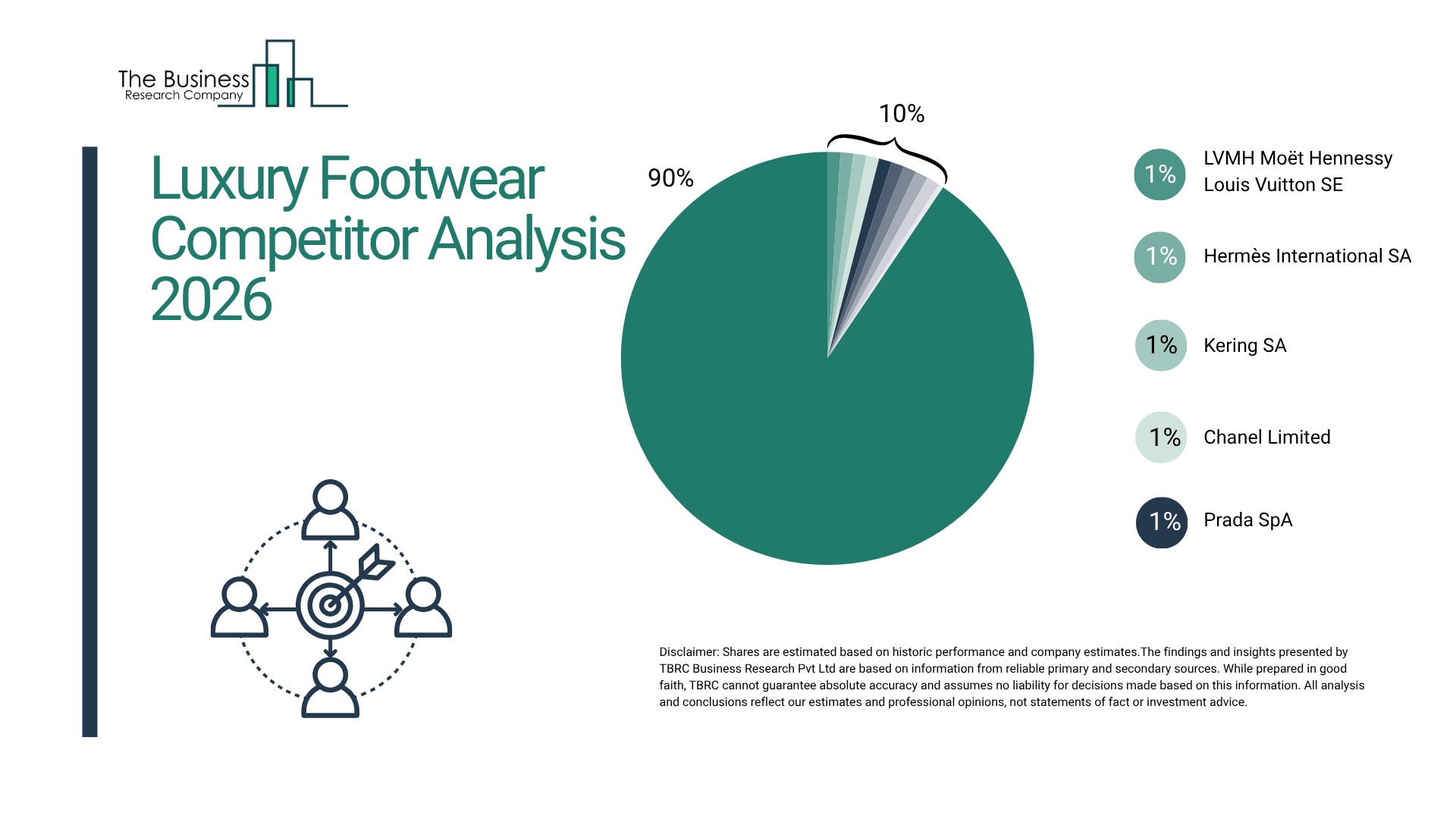
Highly fragmented sector sees top ten players commanding just 10% revenue share, a new global study reveals.
LW Desk
SUMMERY
Top 10 players command just 10% of total luxury footwear revenue.
LVMH led 2024 global sales with a marginal 1% market share.
Companies rely on limited editions, sustainable materials, and digital personalization.
Louis Vuitton’s interchangeable-sole ‘LV Tilted Sneaker’ highlights new product trends.
The global luxury footwear market continues to be dominated by a diverse mix of international luxury fashion houses and premium footwear specialists, according to the newly released Luxury Footwear Global Market Report 2026 by London-based market intelligence firm, The Business Research Company.
To strengthen their market presence and meet evolving consumer expectations, companies in the sector are heavily focusing on exclusive product collections, artisanal craftsmanship, premium material sourcing, digital retail expansion, and personalized customer experiences. Industry analysts note that an emphasis on brand heritage, design innovation, limited-edition launches, sustainability initiatives, and seamless omnichannel engagement remains central to competitive positioning. For stakeholders within the rapidly evolving global luxury fashion ecosystem, understanding this competitive landscape is essential for identifying growth opportunities, product differentiation, and strategic collaborations.
LVMH Takes Marginal Lead in Highly Fragmented Ecosystem
According to the findings, the luxury footwear market exhibits low market consolidation despite the immense influence of established fashion houses. The sector remains highly fragmented, with the top ten players accounting for a combined total of just 10% of market revenue in 2024. This distributed market share is driven by evolving consumer preferences, brand-centric purchasing behavior, a strong emphasis on heritage and craftsmanship, and the robust presence of numerous regional and niche luxury footwear labels.
LVMH Moët Hennessy Louis Vuitton SE led global sales in 2024, securing a 1% market share. The company’s luxury fashion and leather goods portfolio, which is directly involved in the footwear sector, offers a diverse range of premium footwear across renowned brands, supporting craftsmanship excellence, fashion leadership, brand exclusivity, and consumer engagement among affluent and aspirational segments worldwide.
Other prominent market leaders alongside LVMH include Hermès International SA, Kering SA, Chanel Limited, Prada SpA, Burberry Group plc, and Armani Group SpA, each also capturing approximately 1% of the market share in 2024. These are followed closely by Stuart Weitzman LLC (1%), J Choo USA Inc (1%), and Longchamp SAS (0.4%). Additional major companies operating across the sector include Mulberry Group plc, Furla SpA, John Lobb Bootmaker Ltd, Aldo Brue Inc., Paraboot SAS, Lottusse SA, A. Testoni & C. SpA, Grenson Shoes Ltd, Moreschi SpA, Scarosso Srl, and Tricker's Shoes Ltd.
The report states that these leading players maintain notable market shares through prestigious brand portfolios, extensive retail networks, strong customer loyalty, and continuous investment in premium product development. As demand rises for designer footwear, sustainable materials, and digitally enabled shopping journeys, product innovation, brand collaborations, and expansion across high-growth consumer markets are expected to strengthen the competitive positioning of these frontrunners.
Specialized Supply Chains and End Users Drive Market Ecosystem
The report highlights that the performance of the luxury footwear market relies heavily on an intricate network of premier raw material suppliers. Key leather tanneries and material providers sustaining the market include Tanneries Haas, Curtidos Badia, Conceria Il Ponte, Conceria Walpier, Conceria Tempesti, Conceria Puccini Attilio, Horween Leather Company, SB Foot Tanning Company, Pergamena Pelli, Richard Hoffmans GmbH & Co. KG, Gruppo Mastrotto, Rino Mastrotto Group, Conceria Antiba SpA, JBS Couros Luxury Division, Weisbrod-Zürrer AG, Limonta SpA, Alcantara SpA, Seiren Co. Ltd., Conceria Du Puy, and Tannery d'Annonay.
On the distribution front, the major wholesalers and distributors managing global logistics and consumer access include Global Fashion Group, Euroitalia Srl, Level Shoes, Modes Group, Antonioli Group, Al Tayer Insignia, Lane Crawford, Club 21 Group, TSI Holdings Co. Ltd., Tomorrow London Holdings, The Bicester Collection Retail Partners, H. Lorenzo, Pedder Group, Bongénie Grieder, Breuninger GmbH, Holt Renfrew & Co. Ltd., David Jones Pty Ltd., Beymen Group, Chalhoub Group, and Ounass.
Meanwhile, the major end users and primary corporate buyers utilizing these supply networks span the world's most recognizable luxury conglomerates, including LVMH, Kering SA, Prada Group, Hermès International S.A., Richemont, Ferragamo S.p.A., Tod's Group, Chanel Limited, Burberry Group PLC, Tapestry Inc., Capri Holdings Limited, Brunello Cucinelli S.p.A., Moncler Group, Golden Goose S.p.A., and Christian Louboutin S.A.
Innovative Sneaker Architectures and Sustainable Strategies Define New Competitive Trends
Innovative design trends are increasingly transforming the luxury footwear landscape by enhancing product exclusivity and strengthening brand differentiation. A prime example of this trend occurred in February 2026, when Louis Vuitton launched the LV Tilted Sneaker as part of its Spring-Summer 2026 collection. The footwear features an innovative interchangeable sole architecture with dimensionally identical right and left soles. This specialized design, combined with premium material construction and contemporary skate-inspired aesthetics, enhances consumer appeal, reinforces brand heritage, and supports the growing global demand for distinctive, collectible luxury footwear products.
To maintain a competitive edge, major luxury footwear companies are adopting several core, forward-looking strategies. Foremost among these is the implementation of sustainable luxury through responsibly sourced premium materials. Brands are also prioritizing the expansion of limited-edition collections to heighten brand exclusivity and integrating digital personalization into premium footwear experiences. Furthermore, strategic collaborations between luxury brands and prominent fashion influencers, alongside product innovations that advance comfort, craftsmanship, and performance, remain essential pillars for long-term growth in the sector.
Global Giants and Fragmented Market
The data presented in the Luxury Footwear Global Market Report 2026 highlights a fascinating structural paradox within the high-end fashion industry: the coexistence of massive global brand equity along with extreme market fragmentation. While household conglomerates like LVMH, Kering, and Hermès wield disproportionate cultural influence and dictate global style trends, the top ten players combined command a mere 10% of the total market revenue. This reveals that the luxury footwear market is highly democratic at the point of sale, leaving 90% of the market in the hands of regional specialists, bespoke heritage bootmakers, and independent designer labels.
The low consolidation level underscores that luxury in footwear cannot be fully monopolized by corporate scale. Unlike the luxury handbag or watch segments, which lean heavily on rigid corporate brand monopolies, footwear remains deeply tied to specialized comfort, exact physical fit, and localized craftsmanship. A consumer may buy a handbag solely for the logo, but footwear demands structural integrity, a factor that keeps historic, niche cordwainers like John Lobb or Tricker's highly competitive.
Furthermore, the strategic shift toward ‘innovative sneaker architectures’, such as Louis Vuitton's interchangeable-sole LV Tilted Sneaker, underlines how luxury giants are trying to capture the highly lucrative ‘hypebeast’ and collectible demographics. By blurring the lines between athletic street culture and haute couture, and leaning heavily on limited-edition scarcities, major houses are attempting to artificially engineer the exclusive allure traditionally held by artisanal cobblers. Moving forward, the true battleground in this sector will involve balancing these aggressive digital and streetwear-driven expansion strategies with the increasingly strict consumer demands for verifiable material sustainability and authentic, heritage craftsmanship.
—