

India-New Zealand FTA Comes into Force, Opening New Export Opportunities
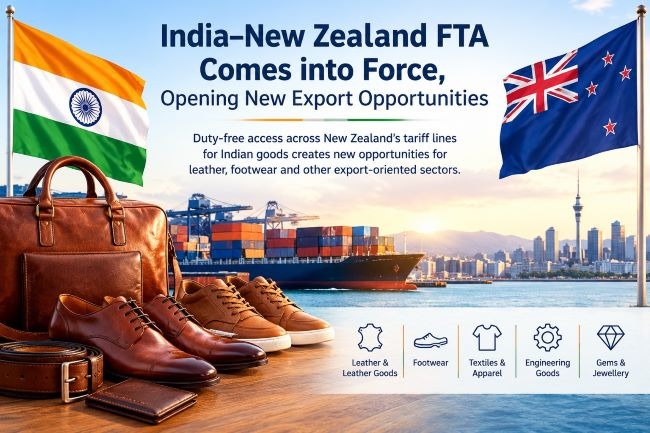
The agreement provides duty-free access across New Zealand’s tariff lines for Indian goods, creating potential opportunities for leather, footwear and other export-oriented industries.
LW Desk
The India-New Zealand Free Trade Agreement (FTA) came into force on October 20, 2026, providing Indian exporters with duty-free access across 100% of New Zealand’s tariff lines and opening new opportunities across multiple industries.
According to the Press Information Bureau (PIB), New Zealand has eliminated customs duties on all tariff lines covering Indian exports, removing peak tariffs of up to 10%.
Leather, footwear, textiles, apparel, engineering goods, gems and jewellery, automobiles and auto components, and pharmaceuticals are among the sectors expected to benefit from the agreement.
Leather and Footwear Among Beneficiary Sectors
The removal of customs duties could improve the price competitiveness of Indian leather and footwear products in New Zealand, potentially helping manufacturers reach new buyers and expand their export business.
The agreement creates opportunities for leather goods manufacturers, footwear producers and export-oriented micro, small and medium enterprises (MSMEs) seeking to diversify their overseas markets. However, the extent of these benefits will depend on market demand, product quality, pricing and compliance with applicable rules of origin.
Wider Trade and Investment Opportunities
Beyond tariff concessions, New Zealand has committed to facilitate USD 20 billion in investment into India, with potential benefits for manufacturing, agriculture, infrastructure and start-ups, according to the PIB announcement.
The agreement also aims to deepen economic cooperation between the two countries and expand bilateral trade. Negotiations began in March 2025 and concluded in December 2025, while the agreement was signed on April 27, 2026.
For Indian exporters, the FTA offers an opportunity to strengthen their presence in New Zealand. Translating improved market access into sustained export growth will depend on businesses’ ability to remain competitive, meet buyer requirements and establish lasting commercial partnerships.