CII Manufacturing Conclave Highlights Technology, Localization as Key to India’s Footwear Growth
LW Desk
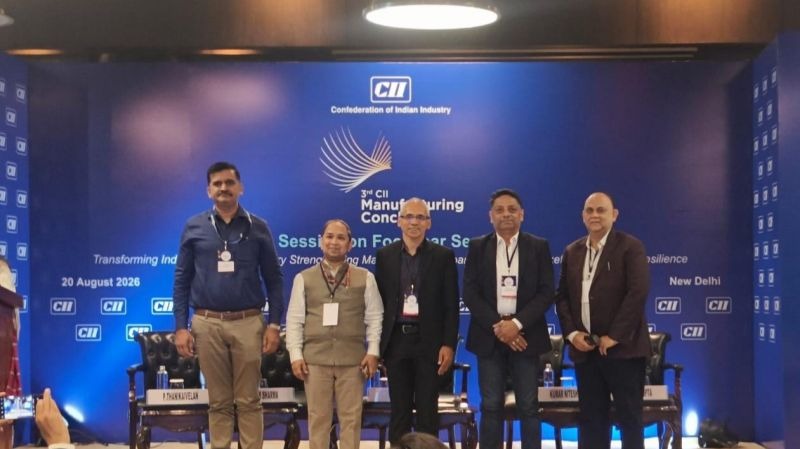
A special session on the footwear sector was held on August 20 as part of the 3rd CII Manufacturing Conclave, where industry experts discussed what it will take to make India’s footwear industry more competitive, resilient and capable of expanding its presence in global markets.
The session began with remarks from V. Noushad, Chairman, CII Task Force on Footwear and MD, Walkaroo International, who underlined the need to strengthen India’s manufacturing capabilities while expanding its presence in international markets. He highlighted policy support, investment, technology adoption and quality improvement as key priorities for the sector, particularly for MSMEs.
Noushad also stressed the importance of building a resilient and sustainable domestic value chain and called for a unified, 10 year, data driven National Footwear Vision to give the industry a clear long-term roadmap and help establish India as a trusted global footwear manufacturing hub.
Speaking at the event, Vivek Sharma, IRS, who heads the Footwear Design & Development Institute (FDDI) under the Ministry of Commerce and Industry, said technology and innovation will play a major role in taking the Indian footwear industry to the next level.
He pointed out that India needs to reduce its dependence on imported machinery and raw materials by developing stronger domestic capabilities. Greater localization, he said, would not only improve resilience but also create a stronger foundation for long-term industrial growth.
Given the large MSME base of the footwear sector, Sharma also stressed the need to ensure that smaller businesses are equipped to participate in this transformation and benefit from advances in technology and manufacturing.
The discussion covered several other priorities, including domestic production of footwear machinery and raw materials, policies that address the value chain as a whole, and manufacturing systems that respond more closely to market requirements.
Quality was another important area of discussion, with speakers emphasizing the need to build quality into the manufacturing process from the outset rather than relying primarily on inspection at the final stage.
The panel also discussed the growing importance of non-leather footwear as sustainability becomes a more significant consideration for consumers and businesses. Industry clusters and greater collaboration among stakeholders were highlighted as potential ways to improve efficiency, encourage knowledge-sharing and strengthen manufacturing capabilities.
The session brought together a range of industry and institutional voices, including Kumar Nitesh, CEO, Footwear, Fashion & Lifestyle Business, Reliance Retail; Sanjay Gupta, President, IFCOMA; and Dr. Thanikaivelan Palanisamy, Director, CSIR–Central Leather Research Institute, along with other sector representatives.
Overall, the discussions pointed to the need for a coordinated approach to the industry’s development, bringing together technology, domestic sourcing, quality, MSME capabilities, policy support and market-driven manufacturing.
As India seeks to expand its footwear footprint both domestically and internationally, progress across these areas could help create a more efficient, innovative and globally competitive footwear manufacturing sector.